Want to be in the loop?
subscribe to
our notification
Business News
URBANISATION BOOSTS DEMAND FOR REAL ESTATE
Demographics driving growth
The boom will be fuelled in large part by urbanisation and a growing middle class that is benefitting from Vietnam's sustained economic growth. GDP is forecast to expand by as much as 6.7 per cent this year, according to the Asian Development Bank.
Meanwhile, the Ministry of Construction expects the level of urbanisation in Viet Nam to rise from 33 per cent in 2014 to 45 per cent by 2020, with city dwellers predicted to be younger and earn more than previous generations, further driving changes in construction and home ownership.
While Viet Nam's property market, much like its population, is still very young, this demography and the relatively low level of home ownership presents opportunities for investors, according to Steven Chu, CEO of Nam Long Investment Corporation.
"Great investment potential exists with 30 per cent home ownership in Viet Nam," Chu told OBG. "Companies investing in the residential real estate market will see high returns from consumers, particularly among the younger generation."
Much of the demand that exists stems from buyers who are able to access loans and mortgages, according to Marc Townsend, managing director of property consultancy CBRE Vietnam, a considerable shift from 2008, when the mortgage market was non-existent.
"There is now more supply from before, considering that take-up and projects are becoming fundamentally larger than in previous cycles," he told OBG.
Property demand
A rise in the number of new real estate companies registered in Viet Nam highlights the market's strong potential.
Registrations were up 146per cent year-on-year in the first quarter, with 596 new companies with combined capital of VND45.5 trillion (US$2.04 billion), as per figures from the Ministry of Planning and Investment.
The surge in demand has served as an incentive for local companies to focus their operations domestically, according to Ee Soon Hean, general director of Japan's Nippon Paint, one of the largest paint manufacturers in the region.
"From 2012 to 2014, several Vietnamese conglomerates and contractors were eyeing markets in Myanmar and Cambodia," he told OBG. "With the rise in demand in the construction and real estate sectors, these companies have decided to focus on the Vietnamese market."
Demand for new residential properties in the low- and middle-income housing segment could reach 5.1million units over the next 10 years, Do Duc Duy, deputy minister of construction, told local media earlier this month.
Metro to track growth
Stakeholders expect the development of accompanying transport infrastructure to further underpin the pace of urban construction.
An extensive network of rail links from districts to the city centres of Ha Noi and HCM City is central to the development of urban areas and the construction industry, according to Le Viet Hai, chairman and CEO of construction firm Hoa Binh Corporation.
The smooth delivery of large-scale infrastructure projects and road developments should also help ease traffic congestion.
However, with different international companies commissioned to build separate segments of the Hanoi urban railway, some disruptions have delayed the project's rollout, which developers fear could weaken demand for residential properties in suburbs and satellite districts.
"The most important thing is finishing the entire metro system, something that I hope the government will push for," Hai told OBG. "Similar to other Asian countries, the real estate business will develop alongside the metro line."
Slower delivery of transport infrastructure projects also affects the commercial segments, according Alex Crane, general manager of global corporate real estate firm Cushman & Wakefield.
"The delay of metro lines hinders companies from preparing a clear, long-term corporate real estate strategy," Crane told OBG. "With clearer insight into the delivery of infrastructure projects, it would be an easier consideration for large multinationals to base their operations outside of the city centres and closer to industrial and business clusters or port infrastructure, for example."
"The metro network is also a key component in establishing a competitive, centralised retail zone," he added.
Credit regulation
As the sector expands, Vietnamese regulators are taking steps to temper the accompanying increase in credit to real estate businesses.
After averaging growth of 14-15 per cent per annum between 2012 and 2014, real estate lending expanded by 18 per cent last year to VND360 trillion ($16.1bn).
Citing concerns that the property market could overheat, the State Bank of Viet Nam (SBV) is considering a proposal to impose restrictions on bank lending to the property market, which could take effect next year.
The SBV may require banks to use no more than 40 per cent of short-term deposits for medium- to long-term loans, down from the current 60 per cent. The bank is also contemplating increasing the risk weight of loans to the real estate sector from 150 per cent to 250 per cent.
Although the move is aimed at strengthening the banking system and reducing risk, it could reduce available funds for mortgages and real estate transactions, which could have negative carry-through effects on the construction industry.
Industry stakeholders have urged the SBV to reconsider the move.
Source: VIR
Related News

INFRASTRUCTURE / CONSTRUCTION / LOGISTIC / PORT
VIỆT NAM-CAMBODIA TRADE GATHERS PACE TOWARDS $20 BILLION TARGET
Trade between Việt Nam and Cambodia continues to grow, remaining a bright spot and a key pillar of bilateral cooperation as the two countries aim to raise two-way trade to US$20 billion in the coming years. After setting a record of more than $11.3 billion last year, bilateral trade reached about $8.7 billion in the first eight months of this year, up 8.3 per cent year on year.
TECHNOLOGY
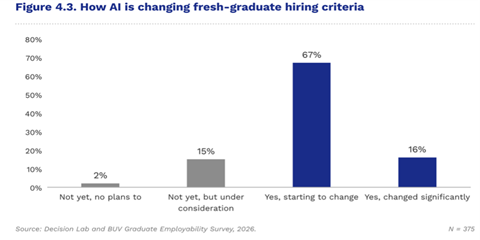
AI BEGINNING TO RESHAPE RECRUITMENT CRITERIA
Digital literacy is the only capability area in which fresh graduates meet employers’ expectations, according to a new report. Yet, it is also the standard rising fastest, as businesses increasingly expect new hires to use AI effectively in the workplace. Some 83 per cent of employers say AI has changed, or is beginning to change, their hiring criteria, while 94 per cent report higher expectations for digital and AI capabilities than they had two to three years ago.

INFRASTRUCTURE / CONSTRUCTION / LOGISTIC / PORT
ĐÀ NẴNG GREEN-LIGHTS US$105 MILLION THAI DEVELOPMENT DEAL
The central city has approved an investment proposal by Thailand’s WHA Group to develop infrastructure for the 400ha WHA Đà Nẵng Industrial Park project on two communes of Thăng Bình and Đồng Dương, with an investment of more than VNĐ2.7 trillion (US$105 million). The city said it approved WHA Industrial Development International's status as an investor in the project, which is expected to take place between 2027 and 2034.

VIETNAM ECONOMY INVESTMENT
MOBILE PHONE EXPORTS RISE 20% TO $51.8 BILLION IN FIRST NINE MONTHS
Exports of mobile phones and components rose 20 per cent year-on-year to nearly US$51.8 billion in the first nine months of 2026, with China, the US and Republic of Korea accounting for more than half of the total. Shipments to the three markets reached a combined $26.18 billion, or 50.6 per cent of total exports of the product group during the period, according to data from the Vietnam Department of Customs under the Ministry of Finance.

VIETNAM ECONOMY INVESTMENT
FRUIT AND VEGETABLE EXPORTS POISED TO HIT $10 BILLION IN 2026
Fruit and vegetable exports are on track to reach nearly US$10 billion in 2026, after rising 19.9 per cent year on year to nearly US$7.4 billion in the first nine months, driven by strong seasonal demand and abundant tropical fruit supplies. The Ministry of Agriculture and Environment said the growth reflected stronger international demand for fresh produce and processed agricultural products.
GARMENT / TEXTILE
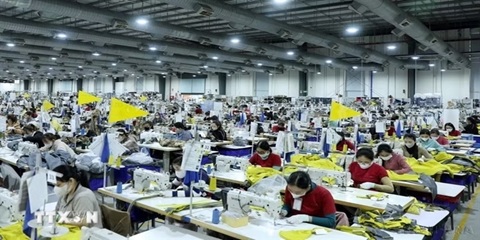
TEXTILE EXPORTS FACE DUAL CHALLENGES OF SUSTAINING ORDERS AND BOOSTING EFFICIENCY AMID GROWING COMPETITION
Data shows that the textile and garment sector maintained its growth momentum in the first nine months of this year. The industry's total export turnover reached an estimated US$35.721 billion in the first nine months of this year, up 3.3 per cent year-on-year. Despite posting encouraging export figures, Vietnamese textile and garment enterprises continue to navigate unpredictable market variables.
Events Sponsors






















